MIC39100/39101/39102
Micrel
MIC39100/39101/39102
1A Low-Voltage Low-Dropout Regulator
General Description
Features
The MIC39100, MIC39101, and MIC39102 are 1A low-dropout
linear voltage regulators that provide low-voltage, high-current
output from an extremely small package. Utilizing Micrel’s proprietary Super βeta PNP™ pass element, the MIC39100/1/2
offers extremely low dropout (typically 410mV at 1A) and low
ground current (typically 11mA at 1A).
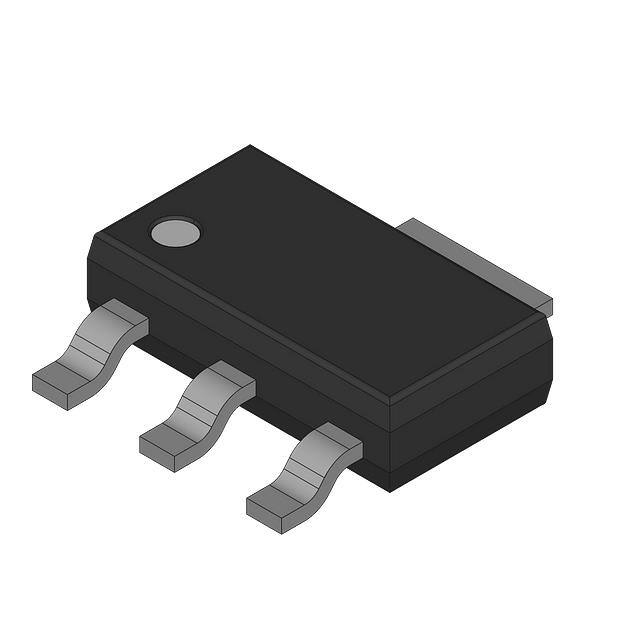
The MIC39100 is a fixed output regulator offered in the
SOT-223 package. The MIC39101 and MIC39102 are fixed
and adjustable regulators, respectively, in a thermally enhanced power 8-lead SOIC package.
The MIC39100/1/2 is ideal for PC add-in cards that need to
convert from standard 5V to 3.3V, 3.3V to 2.5V or 2.5V to
1.8V. A guaranteed maximum dropout voltage of 630mV over
all operating conditions allows the MIC39100/1/2 to provide
2.5V from a supply as low as 3.13V and 1.8V from a supply
as low as 2.43V.
The MIC39100/1/2 is fully protected with overcurrent limiting, thermal shutdown, and reversed-battery protection.
Fixed voltages of 5.0V, 3.3V, 2.5V, and 1.8V are available
on MIC39100/1 with adjustable output voltages to 1.24V on
MIC39102.
For other voltages, contact Micrel.
• Fixed and adjustable output voltages to 1.24V
• 410mV typical dropout at 1A
Ideal for 3.0V to 2.5V conversion
Ideal for 2.5V to 1.8V conversion
• 1A minimum guaranteed output current
• 1% initial accuracy
• Low ground current
• Current limiting and thermal shutdown
• Reversed-battery protection
• Reversed-leakage protection
• Fast transient response
• Low-profile SOT-223 package
• Power SO-8 package
Applications
•
•
•
•
•
•
•
LDO linear regulator for PC add-in cards
PowerPC™ power supplies
High-efficiency linear power supplies
SMPS post regulator
Multimedia and PC processor supplies
Battery chargers
Low-voltage microcontrollers and digital logic
Typical Applications
100k
VIN
3.3V
MIC39100
IN
OUT
GND
VIN
3.3V
2.5V
10µF
tantalum
ENABLE
SHUTDOWN
2.5V/1A Regulator
Error
Flag
Output
MIC39101
IN
OUT
EN
FLG
R1
2.5V
10µF
tantalum
GND
2.5V/1A Regulator with Error Flag
VIN
2.5V
ENABLE
SHUTDOWN
MIC39102
IN
EN
OUT
ADJ
GND
1.5V
R1
R2
10µF
tantalum
1.5V/1A Adjustable Regulator
Super βeta PNP is a trademark of Micrel, Inc.
Micrel, Inc. • 2180 Fortune Drive • San Jose, CA 95131 • USA • tel + 1 (408) 944-0800 • fax + 1 (408) 474-1000 • http://www.micrel.com
August 2005
1
M9999-082505-B
�MIC39100/39101/39102
Micrel
Ordering Information
Part Number
Voltage
Junction Temp. Range
Package
Standard
RoHS Compliant
MIC39100-1.8BS
MIC39100-1.8WS*
1.8V
-40°C to +125°C
SOT-223
MIC39100-2.5BS
MIC39100-2.5WS*
2.5V
-40°C to +125°C
SOT-223
MIC39100-3.3BS
MIC39100-3.3WS*
3.3V
-40°C to +125°C
SOT-223
MIC39100-5.0BS
MIC39100-5.0WS*
5.0V
-40°C to +125°C
SOT-223
MIC39101-1.8BM
MIC39101-1.8YM
1.8V
-40°C to +125°C
SOIC-8
MIC39101-2.5BM
MIC39101-2.5YM
2.5V
-40°C to +125°C
SOIC-8
MIC39101-3.3BM
MIC39101-3.3YM
3.3V
-40°C to +125°C
SOIC-8
MIC39101-5.0BM
MIC39101-5.0YM
5.0V
-40°C to +125°C
SOIC-8
MIC39102BM
MIC39102YM
Adj.
-40°C to +125°C
SOIC-8
* RoHS compliant with ‘high-melting solder’ exemption.
Pin Configuration
GND
TAB
1
IN
2
3
GND OUT
MIC39100-x.x
Fixed
SOT-223 (S)
EN 1
8 GND
EN 1
8 GND
IN 2
7 GND
IN 2
7 GND
OUT 3
6 GND
OUT 3
6 GND
FLG
5 GND
ADJ 4
5 GND
4
MIC39101-x.x
Fixed
SOIC-8 (M)
MIC39102
Adjustable
SOIC-8 (M)
Pin Description
Pin No.
Pin No.
Pin No.
MIC39100 MIC39101 MIC39102
1
3
1
1
2
3
M9999-082505
5–8
Pin Function
EN
Enable (Input): CMOS-compatible control input. Logic high = enable, logic
low or open = shutdown.
2
IN
Supply (Input)
3
OUT
Regulator Output
FLG
Flag (Output): Open-collector error flag output. Active low = output undervoltage.
4
ADJ
Adjustment Input: Feedback input. Connect to resitive voltage-divider
network.
5–8
GND
Ground
4
2, TAB
Pin Name
2
August 2005
�MIC39100/39101/39102
Micrel
Absolute Maximum Ratings (Note 1)
Operating Ratings (Note 2)
Supply Voltage (VIN) .......................................–20V to +20V
Enable Voltage (VEN) .................................................. +20V
Storage Temperature (TS) ........................ –65°C to +150°C
Lead Temperature (soldering, 5 sec.) ........................ 260°C
ESD, Note 3
Supply Voltage (VIN) ................................... +2.25V to +16V
Enable Voltage (VEN) .................................................. +16V
Maximum Power Dissipation (PD(max)) ..................... Note 4
Junction Temperature (TJ) ........................ –40°C to +125°C
Package Thermal Resistance
SOT-223 (θJC) ..................................................... 15°C/W
SOIC-8 (θJC) ........................................................ 20°C/W
Electrical Characteristics(Note 12)
VIN = VOUT + 1V; VEN = 2.25V; TJ = 25°C, bold values indicate –40°C ≤ TJ ≤ +125°C; unless noted
Symbol
Parameter
Condition
VOUT
Output Voltage
10mA
10mA ≤ IOUT ≤ 1A, VOUT + 1V ≤ VIN ≤ 8V
Line Regulation
Load Regulation
ΔVOUT/ΔT
ppm/°C
VDO
Output Voltage Temp. Coefficient,
Min
IOUT = 10mA, VOUT + 1V ≤ VIN ≤ 16V
Max
Units
1
2
%
%
0.06
0.5
%
VIN = VOUT + 1V, 10mA ≤ IOUT ≤ 1A,
0.2
1
%
40
100
IOUT = 100mA, ΔVOUT = –1%
140
200
250
IOUT = 500mA, ΔVOUT = –1%
275
Note 5
Dropout Voltage, Note 6
IOUT = 750mA, ΔVOUT = –1%
IOUT = 1A, ΔVOUT = –1%
IGND
Typ
–1
–2
Ground Current, Note 7
mV
330
500
mV
410
550
630
mV
mV
IOUT = 100mA, VIN = VOUT + 1V
400
µA
4
mA
IOUT = 750mA, VIN = VOUT + 1V
6.5
mA
11
20
mA
VOUT = 0V, VIN = VOUT + 1V
1.8
2.5
A
0.8
V
30
75
µA
µA
2
4
µA
µA
IOUT = 500mA, VIN = VOUT + 1V
IOUT = 1A, VIN = VOUT + 1V
IOUT(lim)
Current Limit
VEN
Enable Input Voltage
logic low (off)
IEN
Enable Input Current
VEN = 2.25V
Enable Input
mV
mV
logic high (on)
2.25
1
V
15
VEN = 0.8V
Flag Output
IFLG(leak)
Output Leakage Current
VOH = 16V
0.01
1
2
µA
µA
VFLG(do)
Output Low Voltage
VIN = 2.250V, IOL, = 250µA, Note 9
210
300
400
mV
mV
VFLG
Low Threshold
High Threshold
Hysteresis
August 2005
% of VOUT
93
%
99.2
% of VOUT
1
3
%
%
M9999-082505-B
�MIC39100/39101/39102
Symbol
Parameter
Micrel
Condition
Min
Typ
Max
Units
1.228
1.215
1.203
1.240
1.252
1.265
1.277
V
V
V
40
80
120
nA
nA
MIC39102 Only
Reference Voltage
Note 10
Adjust Pin Bias Current
Reference Voltage
ppm/°C
Note 7
20
Temp. Coefficient
Adjust Pin Bias Current
Temp. Coefficient
0.1
Note 1.
Exceeding the absolute maximum ratings may damage the device.
Note 2.
The device is not guaranteed to function outside its operating rating.
Note 3.
Devices are ESD sensitive. Handling precautions recommended.
Note 4.
PD(max) = (TJ(max) – TA) ÷ θJA, where θJA depends upon the printed circuit layout. See “Applications Information.”
Note 5.
nA/°C
Output voltage temperature coefficient is ΔVOUT(worst case) ÷ (TJ(max) – TJ(min)) where TJ(max) is +125°C and TJ(min) is –40°C.
Note 6.
VDO = VIN – VOUT when VOUT decreases to 98% of its nominal output voltage with VIN = VOUT + 1V. For output voltages below 2.25V, dropout
voltage is the input-to-output voltage differential with the minimum input voltage being 2.25V. Minimum input operating voltage is 2.25V.
Note 7.
IGND is the quiescent current. IIN = IGND + IOUT.
Note 8.
Note 9.
VEN ≤ 0.8V, VIN ≤ 8V, and VOUT = 0V.
For a 2.5V device, VIN = 2.250V (device is in dropout).
Note 10. VREF ≤ VOUT ≤ (VIN – 1V), 2.25V ≤ VIN ≤ 16V, 10mA ≤ IL ≤ 1A, TJ = TMAX.
Note 11. Thermal regulation is defined as the change in output voltage at a time t after a change in power dissipation is applied, excluding load or line
regulation effects. Specifications are for a 200mA load pulse at VIN = 16V for t = 10ms.
Note 12. Specification for packaged product only.
M9999-082505
4
August 2005
�MIC39100/39101/39102
Micrel
Typical Characteristics
P ower S upply
R ejec tion R atio
PSRR (dB)
40
60
40
40
20 I OUT = 1A
C OUT = 47µF
C IN = 0
0
1E+1
1k 1E+4
10k 1E+5
1M
10 1E+2
100k 1E+6
100 1E+3
FREQUENCY (Hz)
20 I OUT = 1A
C OUT = 10µF
C IN = 0
0
1E+1
1k 1E+4
10k 1E+5
1M
10 1E+2
100k 1E+6
100 1E+3
FREQUENCY (Hz)
P ower S upply
R ejec tion R atio
Dropout V oltage
vs . Output C urrent
Dropout V oltage
vs . T emperature
I OUT = 1A
C OUT = 47µF
C IN = 0
0
1E+1
1k 1E+4
10k 1E+5
1M
10 1E+2
100k 1E+6
100 1E+3
FREQUENCY (Hz)
Dropout C harac teris tic s
(2.5V )
2.8
2.6
OUTPUT VOLTAGE (V)
2.2
I LOAD =750mA
I LOAD =1A
1.6
2
3.5
G round C urrent
vs . S upply V oltage (2.5V )
2.0
1.8
1.6
1.4
1.2
1.0
0.8
0.6
0.4
0.2
0
2.3
2.6
2.9
3.2
SUPPLY VOLTAGE (V)
August 2005
450
350
300
-40 -20 0 20 40 60 80 100 120
TEMPERATURE (°C)
14
3.0
I LOAD =750mA
I LOAD =1A
3.2
3.6
4.0
SUPPLY VOLTAGE (V)
8
10
8
G round C urrent
vs . S upply V oltage (2.5V )
1.8V
2.5V
3.3V
6
4
2
0
0
4.4
200 400 600 800
OUTPUT CURRENT (mA)
1000
G round C urrent
vs . S upply V oltage (3.3V )
1.4
1.2
25
I LOAD =1A
20
15
10
5
0
G round C urrent
vs . Output C urrent
12
3.2
2.6
2.5V
400
I LOAD =100mA
2.8
1.8V
3.3V
30
I LOAD =10mA
2
4
6
SUPPLY VOLTAGE (V)
500
Dropout C harac teris tic s
(3.3V )
35
I LOAD =100mA
0
250 500 750 1000 1250
OUTPUT CURRENT (mA)
2.4
2.8
GROUND CURRENT (mA)
1.4
T A = 25°C
3.4
2.4
1.8
1.8V
3.6
I LOAD =100mA
2.0
3.3V
0
I LOAD = 1A
550
2.5V
GROUND CURRENT (mA)
20
600
DROPOUT VOLTAGE (mV)
40
500
450
400
350
300
250
200
150
100
50
0
GROUND CURRENT (mA)
V IN = 3.3V
V OUT = 2.5V
60
OUTPUT VOLTAGE (V)
V IN = 3.3V
V OUT = 2.5V
20 I OUT = 1A
C OUT = 10µF
C IN = 0
0
1E+1
1k 1E+4
10k 1E+5
1M
10 1E+2
100k 1E+6
100 1E+3
FREQUENCY (Hz)
80
GROUND CURRENT (mA)
P ower S upply
R ejec tion R atio
80
V IN = 5V
V OUT = 3.3V
60
DROPOUT VOLTAGE (mV)
PSRR (dB)
60
PSRR (dB)
80
V IN = 5V
V OUT = 3.3V
PSRR (dB)
80
P ower S upply
R ejec tion R atio
0
2
4
6
SUPPLY VOLTAGE (V)
5
8
1.0
I LOAD =100mA
0.8
0.6
I LOAD =10mA
0.4
0.2
0
0
2
4
6
SUPPLY VOLTAGE (V)
8
M9999-082505-B
�MIC39100/39101/39102
1.0
I LOAD =1A
30
20
10
0
0
2
4
6
SUPPLY VOLTAGE (V)
I LOAD =10mA
0.6
3.3V
0.4
0.2
2.5V
1.8V
0
-40 -20 0 20 40 60 80 100 120
TEMPERATURE (°C)
8
G round C urrent
vs . T emperature
20
0.8
GROUND CURRENT (mA)
40
G round C urrent
vs . T emperature
GROUND CURRENT (mA)
G round C urrent
vs . S upply V oltage (3.3V )
50
GROUND CURRENT (mA)
Micrel
3.40
Output V oltage
vs . T emperature
5.0
4.5
4.0
3.5
3.0
2.5
2.0
2.5
0
-40 -20 0 20 40 60 80 100 120
TEMPERATURE (°C)
3.20
-40 -20 0 20 40 60 80 100 120
TEMPERATURE (°C)
12
V IN = 5V
5
FLAG VOLTAGE (V)
3.25
E rror F lag
P ull-Up R es is tor
6
F LAG HIG H
(OK )
4
3
2
F LAG LOW
(F AULT )
1
0
0.01
3.30
0.1
M9999-082505
1
10 100 1000 10000
RESISTANCE (kΩ)
10
SHORT CIRCUIT CURRENT (A)
5
T ypical 3.3V
Device
E nable C urrent
vs . T emperature
8
6
4
2
0
-40 -20 0 20 40 60 80 100 120 140
TEMPERATURE (°C)
6
2.0
3.3V
1.8V
S hort C irc uit
vs . T emperature
3.3V
1.5
2.5V
1.0
1.8V
0.5
0
-40 -20 0 20 40 60 80 100 120
TEMPERATURE (°C)
250
V IN = V OUT + 1V
V E N = 2.4V
200
FLAG VOLTAGE (mV)
3.3V
OUTPUT VOLTAGE (V)
10
3.35
ENABLE CURRENT (µA)
GROUND CURRENT (mA)
1.8V
2.5V
2.5V
1.5
1.0
I LOAD = 500mA
0.5
0
-40 -20 0 20 40 60 80 100 120
TEMPERATURE (°C)
I LOAD = 1A
15
G round C urrent
vs . T emperature
F lag-L ow V oltage
vs . T emperature
F LAG -LOW
V OLT AG E
150
100
V IN = 2.25V
R P ULL-UP = 22kΩ
50
0
-40 -20 0 20 40 60 80 100 120 140
TEMPERATURE (°C)
August 2005
�MIC39100/39101/39102
Micrel
Functional Characteristics
August 2005
7
M9999-082505-B
�MIC39100/39101/39102
Micrel
Functional Diagrams
OU T
IN
OV I LIMIT
1.240V
Ref.
18V
Thermal
Shutdown
MIC39100
GND
MIC39100 Fixed Regulator Block Diagram
OU T
IN
O.V.
ILIMIT
1.180V
FL AG
Ref.
18V
1.240V
EN
Thermal
Shutdown
GND
MIC39101
MIC39101 Fixed Regulator with Flag and Enable Block Diagram
OU T
IN
O.V.
ILIMIT
Ref.
18V
1.240V
ADJ
EN
Thermal
Shutdown
GND
MIC39102
MIC39102 Adjustable Regulator Block Diagram
M9999-082505
8
August 2005
�MIC39100/39101/39102
Micrel
Applications Information
Input Capacitor
An input capacitor of 1µF or greater is recommended when
the device is more than 4 inches away from the bulk ac supply
capacitance or when the supply is a battery. Small, surface
mount, ceramic chip capacitors can be used for bypassing.
Larger values will help to improve ripple rejection by bypassing the input to the regulator, further improving the integrity
of the output voltage.
Error Flag
The MIC39101 features an error flag (FLG), which monitors
the output voltage and signals an error condition when this
voltage drops 5% below its expected value. The error flag is
an open-collector output that pulls low under fault conditions
and may sink up to 10mA. Low output voltage signifies a
number of possible problems, including an overcurrent fault
(the device is in current limit) or low input voltage. The flag
output is inoperative during overtemperature conditions. A
pull-up resistor from FLG to either VIN or VOUT is required
for proper operation. For information regarding the minimum
and maximum values of pull-up resistance, refer to the graph
in the typical characteristics section of the data sheet.
Enable Input
The MIC39101 and MIC39102 versions feature an active-high
enable input (EN) that allows on-off control of the regulator.
Current drain reduces to “zero” when the device is shutdown,
with only microamperes of leakage current. The EN input has
TTL/CMOS compatible thresholds for simple logic interfacing.
EN may be directly tied to VIN and pulled up to the maximum
supply voltage
Transient Response and 3.3V to 2.5V or 2.5V to 1.8V
Conversion
The MIC39100/1/2 has excellent transient response to
variations in input voltage and load current. The device has
been designed to respond quickly to load current variations
and input voltage variations. Large output capacitors are not
required to obtain this performance. A standard 10µF output
capacitor, preferably tantalum, is all that is required. Larger
values help to improve performance even further.
By virtue of its low-dropout voltage, this device does not saturate into dropout as readily as similar NPN-based designs.
When converting from 3.3V to 2.5V or 2.5V to 1.8V, the NPN
based regulators are already operating in dropout, with typical dropout requirements of 1.2V or greater. To convert down
to 2.5V or 1.8V without operating in dropout, NPN-based
regulators require an input voltage of 3.7V at the very least.
The MIC39100 regulator will provide excellent performance
with an input as low as 3.0V or 2.5V respectively. This gives
the PNP based regulators a distinct advantage over older,
NPN based linear regulators.
Minimum Load Current
The MIC39100/1/2 regulator is specified between finite loads.
If the output current is too small, leakage currents dominate
and the output voltage rises. A 10mA minimum load current
is necessary for proper regulation.
The MIC39100/1/2 is a high-performance low-dropout voltage regulator suitable for moderate to high-current voltage
regulator applications. Its 630mV dropout voltage at full load
and overtemperature makes it especially valuable in battery-powered systems and as high-efficiency noise filters in
post-regulator applications. Unlike older NPN-pass transistor
designs, where the minimum dropout voltage is limited by the
base-to-emitter voltage drop and collector-to-emitter saturation voltage, dropout performance of the PNP output of these
devices is limited only by the low VCE saturation voltage.
A trade-off for the low dropout voltage is a varying base drive
requirement. Micrel’s Super βeta PNP™ process reduces this
drive requirement to only 2% of the load current.
The MIC39100/1/2 regulator is fully protected from damage
due to fault conditions. Linear current limiting is provided.
Output current during overload conditions is constant. Thermal shutdown disables the device when the die temperature
exceeds the maximum safe operating temperature. Transient
protection allows device (and load) survival even when the
input voltage spikes above and below nominal. The output
structure of these regulators allows voltages in excess of
the desired output voltage to be applied without reverse
current flow.
V IN
C IN
MIC39100-x.x
IN
OUT
GND
V OUT
C OUT
Figure 1. Capacitor Requirements
Output Capacitor
The MIC39100/1/2 requires an output capacitor to maintain
stability and improve transient response. Proper capacitor selection is important to ensure proper operation. The
MIC39100/1/2 output capacitor selection is dependent upon
the ESR (equivalent series resistance) of the output capacitor
to maintain stability. When the output capacitor is 10µF or
greater, the output capacitor should have an ESR less than
2Ω. This will improve transient response as well as promote
stability. Ultra-low-ESR capacitors (